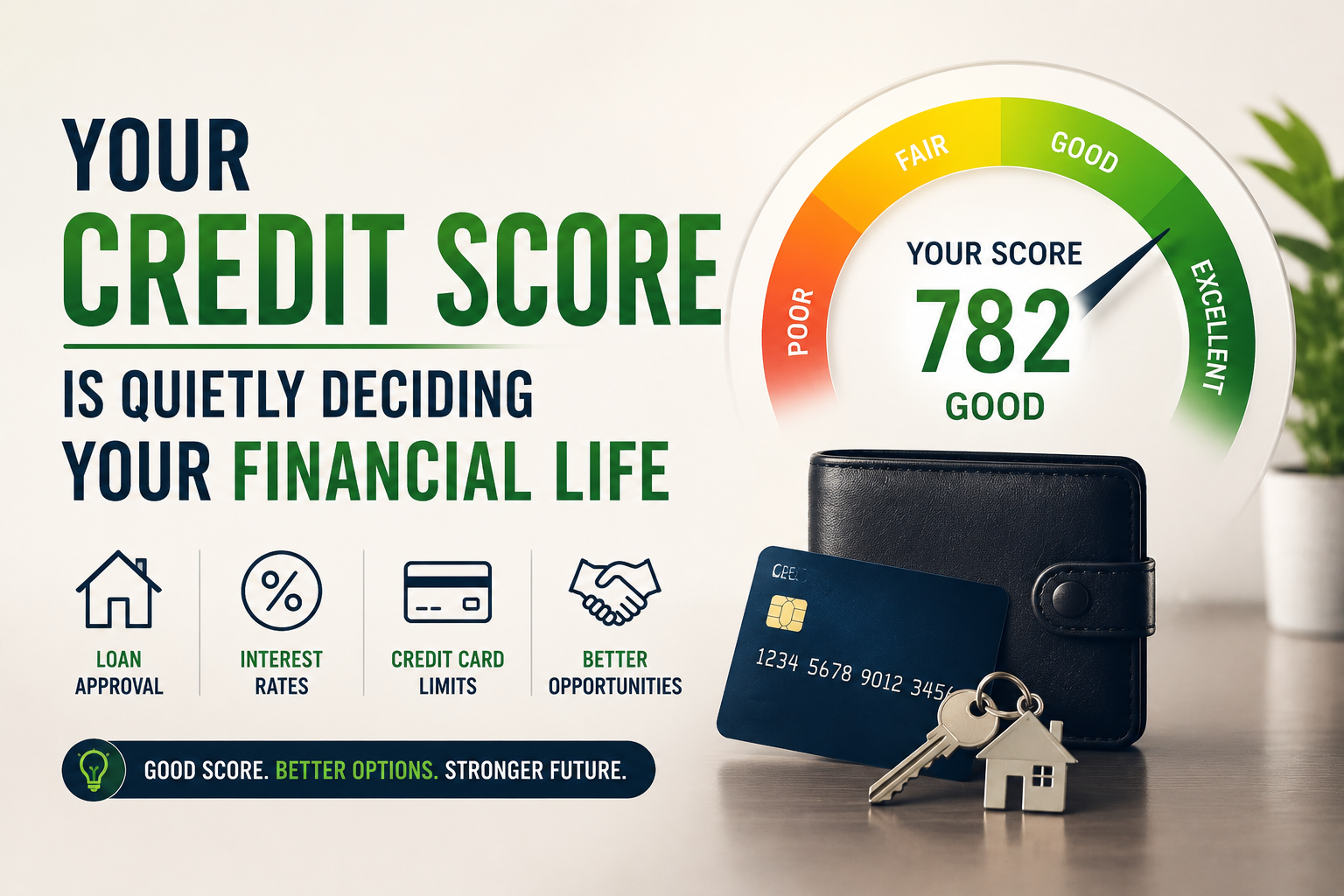
Your Credit Score Is Quietly Deciding Your Financial Life
You've probably heard the number "750" thrown around as some kind of magic threshold. Most people never look at their credit score until a loan application gets rejected - by then, the score has already been quietly shaping their financial options for years.
What It Actually Is
A credit score is a three-digit number (300-900 in India, via CIBIL, Experian, Equifax, or CRIF) that summarizes how reliably you've repaid borrowed money in the past. Banks and lenders use it to decide whether to lend to you, how much, and at what interest rate - before they even see the rest of your application.
What Actually Affects It
- Repayment history (the biggest factor) - paying credit card bills and EMIs on time, every time.
- Credit utilization - how much of your available credit card limit you're actually using. Maxing out cards regularly hurts your score, even if you pay in full each month.
- Length of credit history - older, well-managed accounts help; closing your oldest credit card can actually lower your score.
- Credit mix - a healthy mix of secured (like a car/home loan) and unsecured (credit card) debt is viewed favorably.
- Hard inquiries - applying for many loans or cards in a short span signals risk and can pull your score down.
Why It Matters Even If You're Not Borrowing Right Now
- Interest rates scale with your score. A high score can mean a meaningfully lower interest rate on a home or car loan - on a large, long-tenure loan, that difference compounds into lakhs saved over the loan's life.
- It affects more than loans. Landlords, and in some cases employers, occasionally check credit reports. A poor score can quietly narrow options you wouldn't expect it to touch.
- It takes time to fix, not fix overnight. Scores respond to months of consistent behavior, not a single payment. Building good credit before you need it matters more than fixing it after a rejection.
The Most Common Mistake
Treating a credit card like "free money" instead of a repayment obligation. Paying only the minimum due, or letting utilization stay consistently high, damages the score even without ever missing a payment outright.
The Takeaway
Your credit score isn't just paperwork for loan applications - it's a running record that shapes the interest rates and financial options available to you for years. Checking it periodically (most bureaus offer one free report a year) and paying on time, every time, is one of the highest-leverage financial habits that costs nothing to build.